Your horse’s diet may need adjusting with the new season ahead.
Fall is nearly here! Horse owners can already see the changes taking place. Your barn is likely stocked with hay, your horse has some winter hair growing in, and the mornings are chilly. And while there is so much to love about fall, this season does require some dietary adjustments. Your horse’s needs will likely change in some shape or form.
Don’t fall for these myths when making adjustments to your horse’s diet! Get the facts and always check with your veterinarian or equine nutritionist when in doubt.
Fall Feeding Myth #1
Pastures will be low in sugar this time of year.
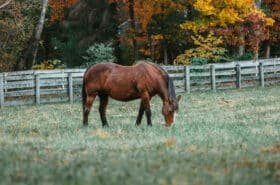
Reality: The cool temperatures actually increase the sugars in the grass as it prepares for dormancy. Your fall pasture may have more sugar in the grass than in the spring. It’s essential that you carefully manage horses and ponies that are prone to laminitis. They may need to be kept in a dry lot or wear a muzzle.
Fall Feeding Myth #2
The most important part of your horse’s diet is concentrated feeds.
Reality: With winter in the distance, owners may be worried about their horses dropping weight. It can be a common misconception that grain and sweet feeds will keep the weight on your horse. In actuality, forage like hay and grass should be the majority of your horse’s diet. Concentrated feeds are only meant to fill nutritional gaps.
Fall Feeding Myth #3
Fresh cut hay isn’t safe to feed. It needs to cure for 6-8 weeks.
Reality: Hay is safe to eat after it’s harvested as long as your hay farmer properly cured it prior to baling. The hay should have been given the correct amount of time to dry before baled. Hay should be baled with 12% or less moisture. It can actually be dangerous to bale wet hay and allow it to cure in the bale. This results in heat production and often fermentation.
Fall Feeding Myth #4
The color of your hay determines its nutritional value.
Reality: The only way to accurately determine the nutritional value of your hay is to have it tested. A hay analysis will provide you with quality information. Green hay isn’t always beter than brown hay.
Fall Feeding Myth #5
Bran mash is the best way to warm your horse.
Reality: There are some benefits to feeding beet pulp and bran mash, but warming your horse up isn’t one of them. The best way to keep a horse warm on a cold day is to offer them plenty of hay. You’ll warm them from the inside out as their digestive system kicks into action like a build-in furnace.
It’s important you take the time to pick out the facts verses myths in regards to how you feed your horse. It can make a big difference in their health and wellness.