Autumn can be a wonderful time of year. The weather is turning cooler and changing leaves provide beautiful scenery. However, the season also brings an increased risk of several health problems for horses. It’s important to be aware of these risks so you can do your best to prevent them.
EPM
Equine protozoal myeloencephalitis (EPM) is a serious disease that often develops in the fall. This is likely due to opossums, the primary hosts of the parasites that cause EPM, becoming more active in cooler weather. When feed or water is contaminated with opossum feces, this may expose your horse to the parasite that causes EPM. Horses may also experience increased stress in the fall with heavy exercise, transport, and competition. Stress negatively impacts your horse’s immune system and leaves them more susceptible to problems like EPM.
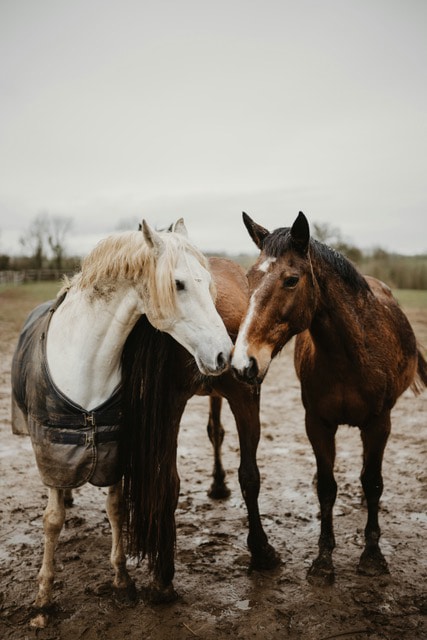 To reduce the risk of EPM, keep your barn and surrounding areas clean and free of food or waste that might attract opossums. Also, manage your horse’s stress levels by giving them ample recovery time after hard work or competition.
DEW POISONING
Autumn often means higher amounts of dew on grass, which can lead to dew poisoning. This is a painful skin condition which causes cracks in the skin that can become infected with bacteria. To help prevent dew poisoning, provide a dry space such as a stall or shed and dry your horses’s legs off daily to prevent bacteria buildup.
LAMINITIS
Laminitis is a painful condition that affects the laminae of the hoof. It can occur in any season, but both spring and fall bring a higher risk due to changes in grass, as well as hormonal fluctuations caused by shorter daylight hours.
You can help prevent laminitis by monitoring grass intake, especially in overweight horses. This can be done with a dry lot, use of a grazing muzzle , or implementing a track system.
THRUSH
Thrush is an infection in the frog and tends to occur when horses are kept in damp or muddy conditions. Autumn brings an increased risk of thrush due to high rainfall and cooler temperatures. Thrush may appear as a deep crack in the central sulcus, and there may also be a bad smell or discharge from the area.
Thrush can be prevented with routine hoof care and monitoring of the frog area. Again, having a dry space for your horse is important.